
What is Pelvic Floor Muscle & its Function?
Pelvic Floor Muscles (Bottom View)
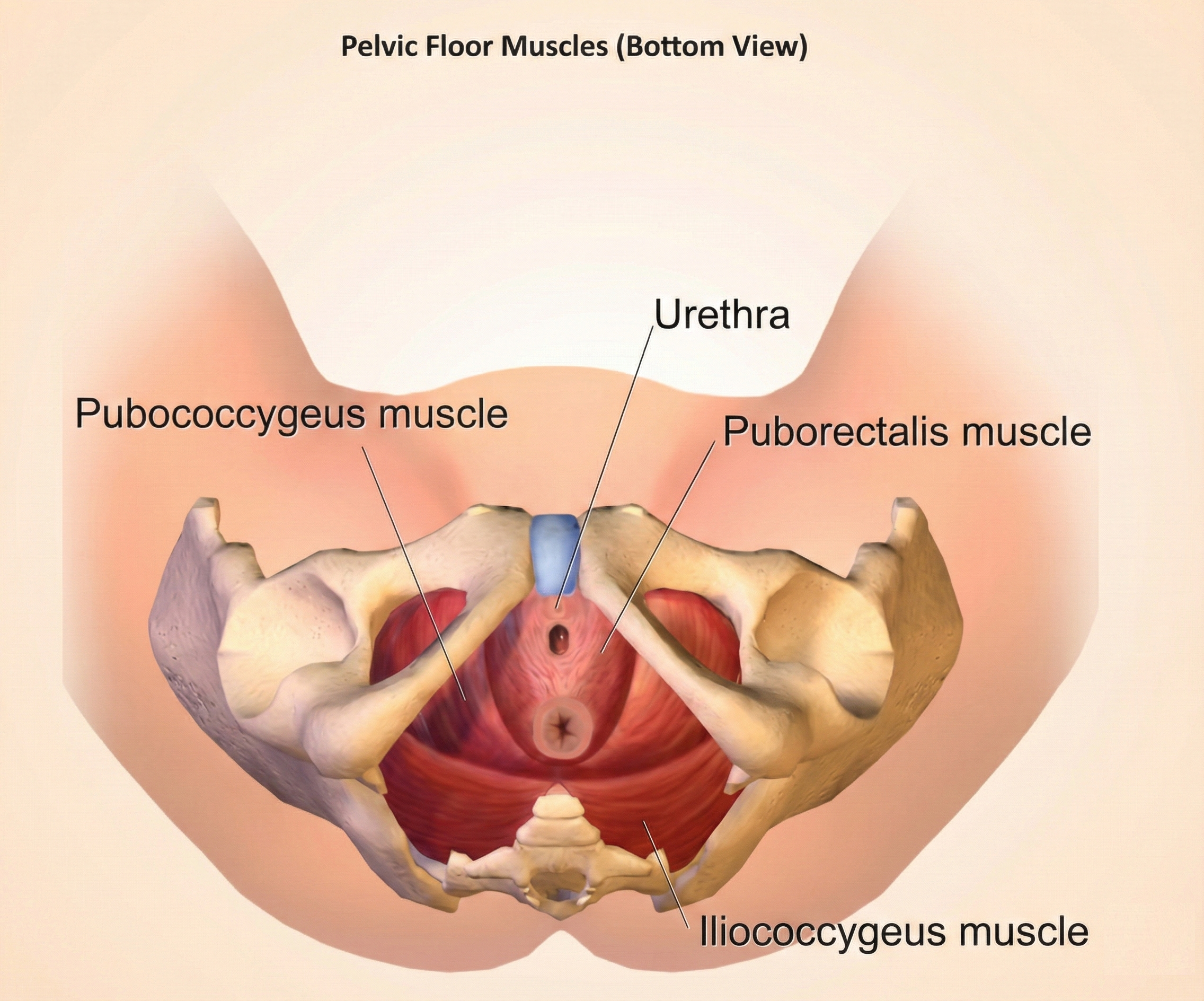

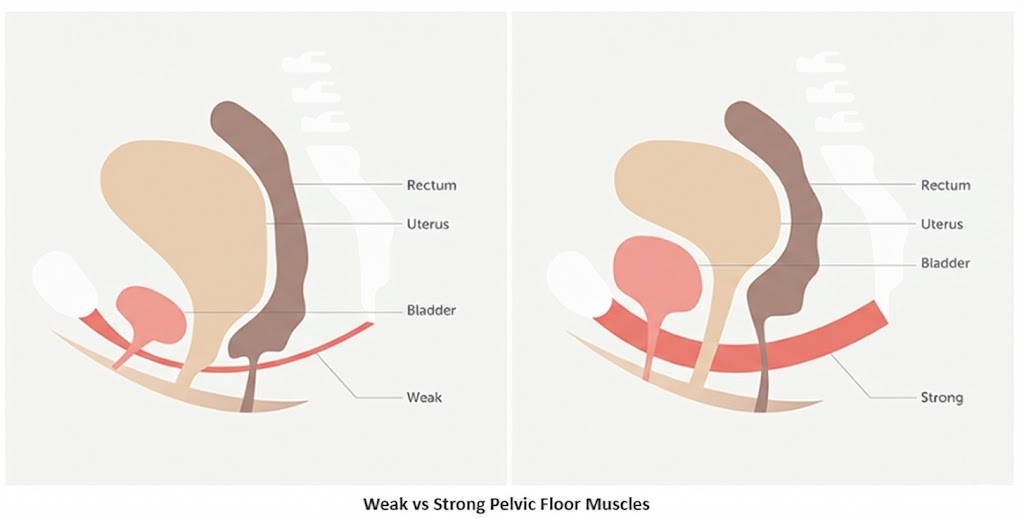
Above images are showing how Pelvic Floor Muscles sit in relation to body structures and its relation to pelvic bones and organs.
The pelvic floor muscles include the pubococcygeus, puborectalis, and iliococcygeus. These muscles support the internal organs in the pelvis, which are: the uterus, vagina, bladder, urethra, and rectum.
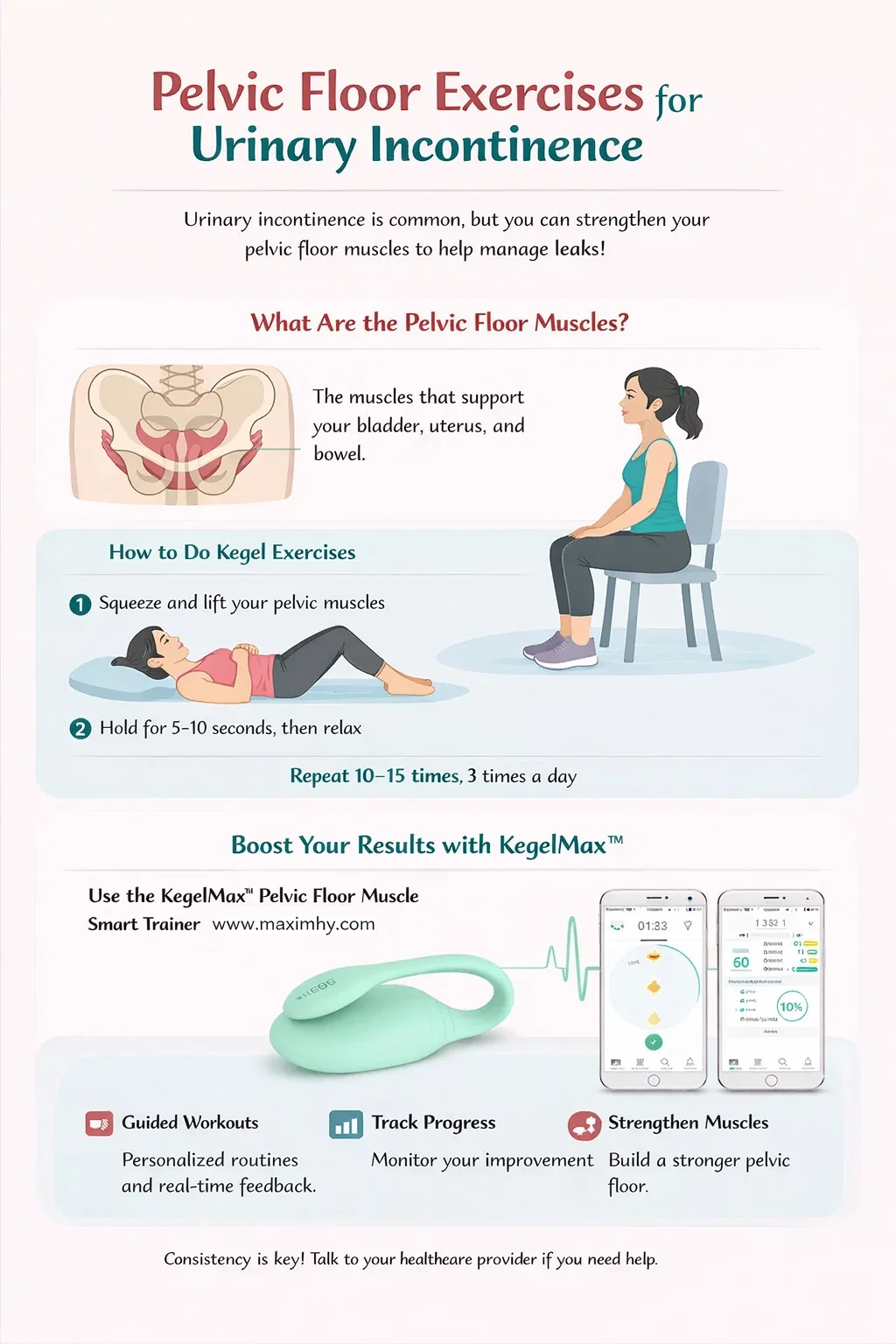
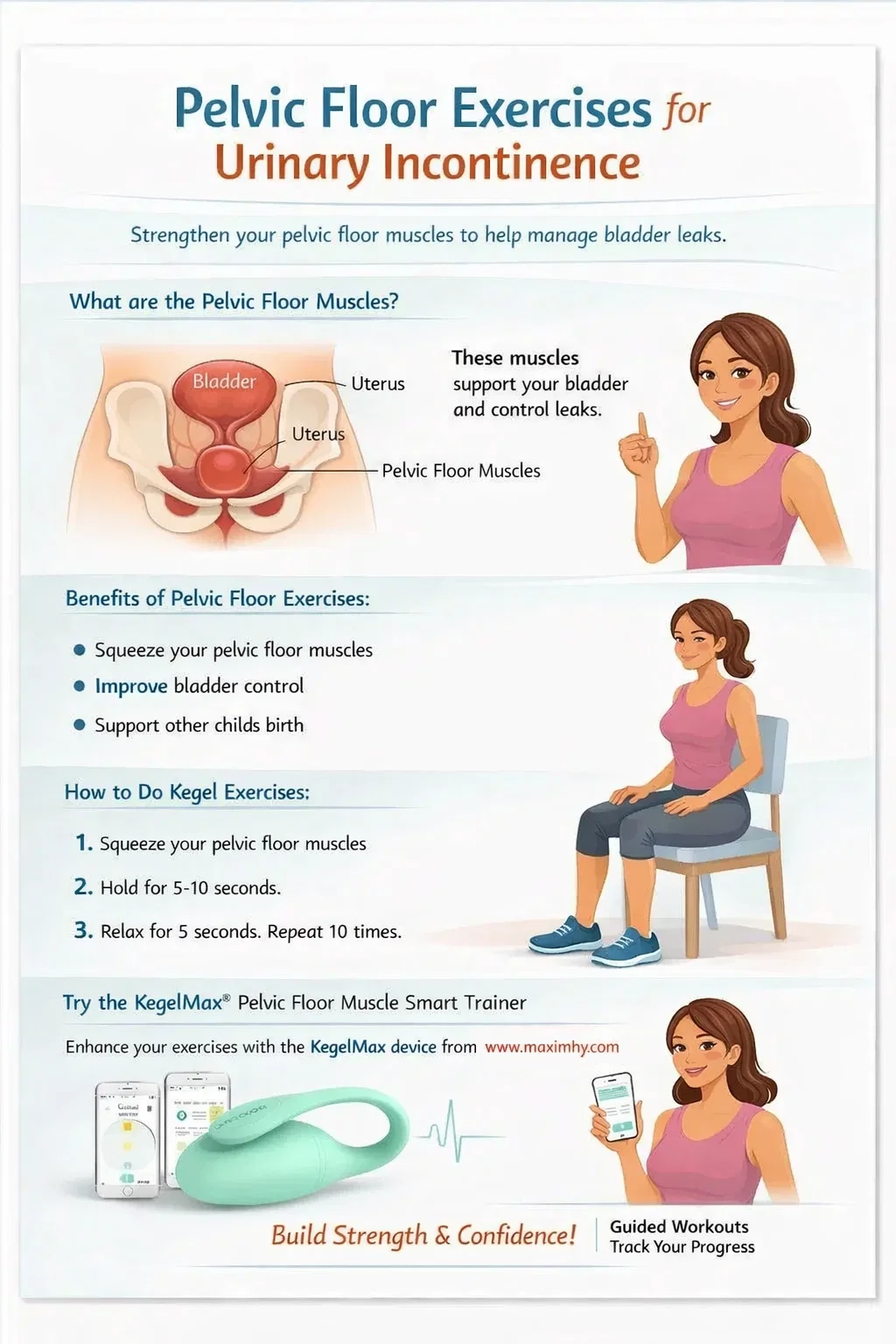
Pelvic Floor Exercises for Urinary Incontinence
Your One-Page Guide for Everyday Use:
Urinary incontinence (leaking urine) is very common—especially among women—and it can affect people of all ages. The good news is that pelvic floor exercises are a safe, natural, and effective first in line way to improve bladder control. When done correctly and consistently, studies show up to 70% improvement, especially for stress urinary incontinence.
What Are Pelvic Floor Muscles?
Your pelvic floor muscles form a supportive hammock at the bottom of your pelvis. They help:
- Support the bladder, uterus, and bowel
- Control urine flow
- Prevent leaks when you cough, laugh, sneeze, or exercise
Who Can Benefit?
Pelvic floor exercises can help women who:
- Leak urine when coughing, sneezing, or exercising (stress incontinence)
- Have mixed bladder symptoms
- Are pregnant or recently gave birth
- Experience bladder control changes with age
They are helpful for all ages, but work best when practiced regularly for at least 3 months.
How to Find the Right Muscles
Try this once to identify the muscles:
- Imagine gently lifting and holding in urine and gas at the same time
- The muscles you feel tightening are your pelvic floor muscles
Do not regularly stop urine mid-flow—this is only to identify the muscles.

How to Do Pelvic Floor Exercises (Kegels)
- Get comfortable – Sit, lie down, or stand
- Tighten pelvic floor muscles gently
- Hold for 3–5 seconds (breathe normally)
- Relax fully for 3–5 seconds
- Repeat 10 times
Do this 3 times a day.
As muscles get stronger, work up to 10-second holds.
Helpful Tips for Success
- Keep stomach, legs, and buttocks relaxed
- Do not hold your breath
- Quality matters more than strength
- Consistency is key
Supervised programs with a physiotherapist or continence nurse often lead to better results.

When Will I See Results?
Most women notice improvement within 6–12 weeks. Best results occur with:
- Daily practice
- Correct technique
- Ongoing use
Pelvic floor exercises help all types of urinary incontinence, but they are especially effective for stress urinary incontinence.
Strengthen Your Results with KegelMax® Smart Pelvic Floor Trainer
Pelvic floor exercises are a gentle, medication-free way to improve bladder control. For many women, results improve even more when exercises are done correctly and consistently. To support proper technique and motivation, Maxim offers the KegelMax® Pelvic Floor Muscle Smart Trainer, available at www.kegekmaxtrainer.com.
How KegelMax® Can Help
- Guides you to activate the correct pelvic floor muscles
- Helps improve strength, endurance, and control
- Encourages consistency with guided training support
- Suitable for women of all ages and experience levels
Clinical research shows pelvic floor muscle training is most effective when done correctly and, when possible, with guidance. A smart trainer like KegelMax® can provide that support in the comfort and privacy of your home.
A Simple, Empowering Path to Better Bladder Control
Whether you are just starting pelvic floor exercises or looking to improve your progress, combining daily exercises with a smart pelvic floor trainer can help you stay consistent and confident.
If symptoms persist, consult a healthcare professional for personalized guidance.