
Why It Matters and How to Strengthen It
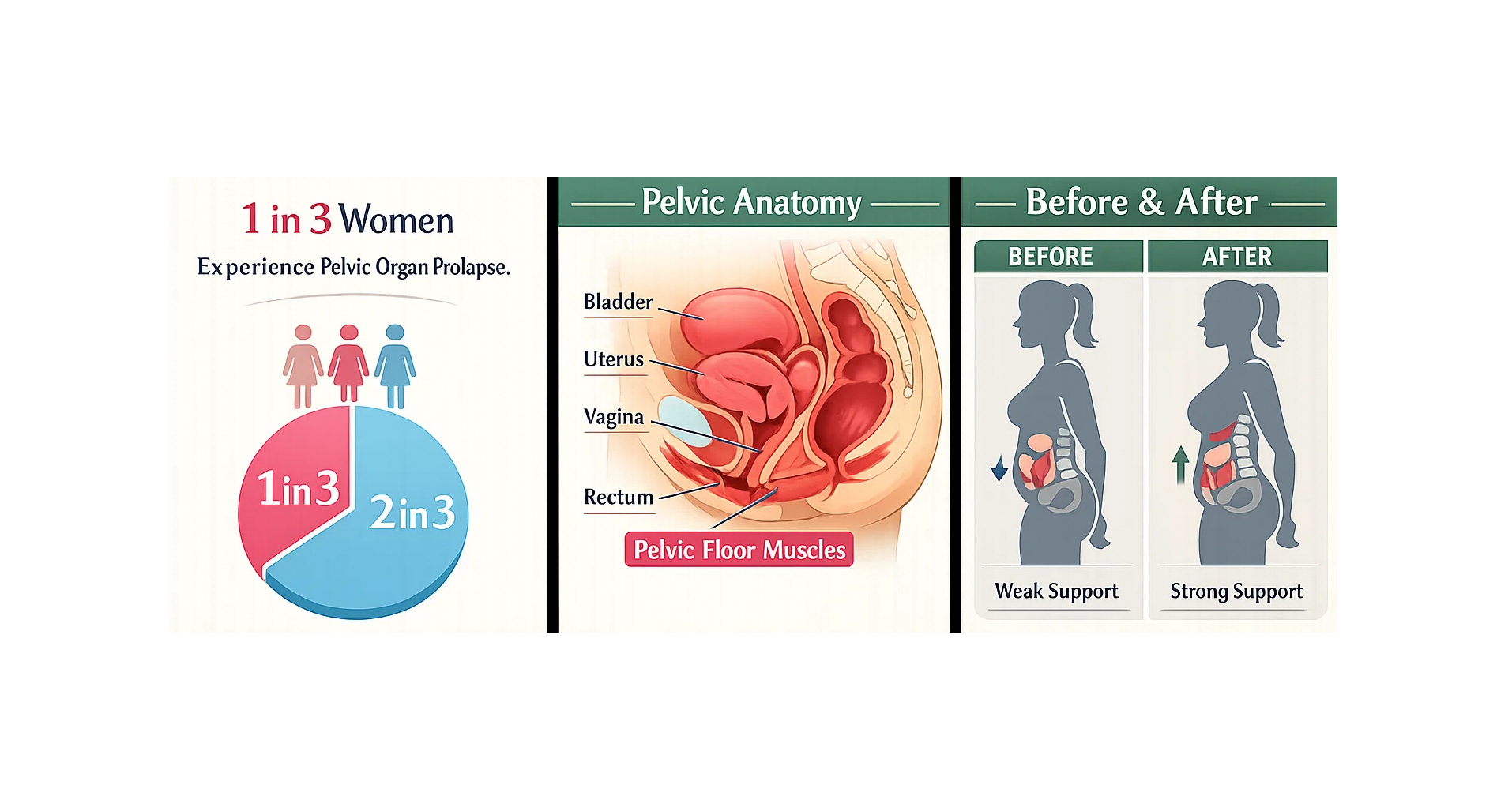
Your pelvic floor is a group of muscles that sits at the base of your pelvis. Think of it like a supportive “hammock” that helps hold up the bladder, uterus, and bowels. These muscles also play a major role in bladder control, core stability, and intimate wellness.
Why Pelvic Floor Strength Matters (Especially After 30)
Over time, pelvic floor muscles can weaken due to aging, pregnancy and childbirth, weight changes, high-impact exercise, chronic coughing, or lifestyle factors. For many women over 30, this can lead to symptoms that affect everyday life.
Common issues include:
- Urinary incontinence, such as leaking when you run, laugh, sneeze, or cough
- Reduced bladder control—many women report wanting better control during daily activities
- Postpartum leakage, which can impact confidence and quality of life
- Increased risk of pelvic organ prolapse (a heavy or “dragging” feeling)
- Changes in sexual satisfaction due to weakened muscle tone
These concerns are more common than most people realize. Up to 1 in 3 women experience some form of pelvic floor dysfunction. Postpartum, 80% of new moms experience leakage. And in surveys, 51% of women say they want better bladder control.
The Good News: Pelvic Floor Exercises Can Help
Regular Kegel exercises can strengthen the pelvic floor, improving bladder control, supporting recovery after childbirth, and boosting overall pelvic wellness. Many women see meaningful improvements when they train consistently.
Technique Matters More Than Force
Here’s the key: Kegels only work if they’re done correctly. Without guidance, over 50% of women perform Kegels incorrectly, and about 1 in 4 may strain the pelvic floor by pushing down (bearing down) instead of lifting.
A correct Kegel should feel like a gentle lift upward, not a push or strain.
How to Strengthen Your Pelvic Floor Safely
Try this beginner-friendly routine:
- Lift and hold a gentle contraction for 3–5 seconds (breathe normally)
- Relax fully for 3–5 seconds
- Repeat 10 times
- Do 3 sets per day
As you get stronger, work up to 10-second holds—but avoid clenching too hard.
Tip: If you feel pressure pushing downward, tighten your stomach, or squeeze your glutes/thighs, reset and reduce effort. Quality beats intensity.
When to Get Extra Support
If you’re postpartum, have pelvic pain, suspect prolapse, or symptoms persist, it’s best to consult a pelvic health professional for personalized guidance.
 Learn More